
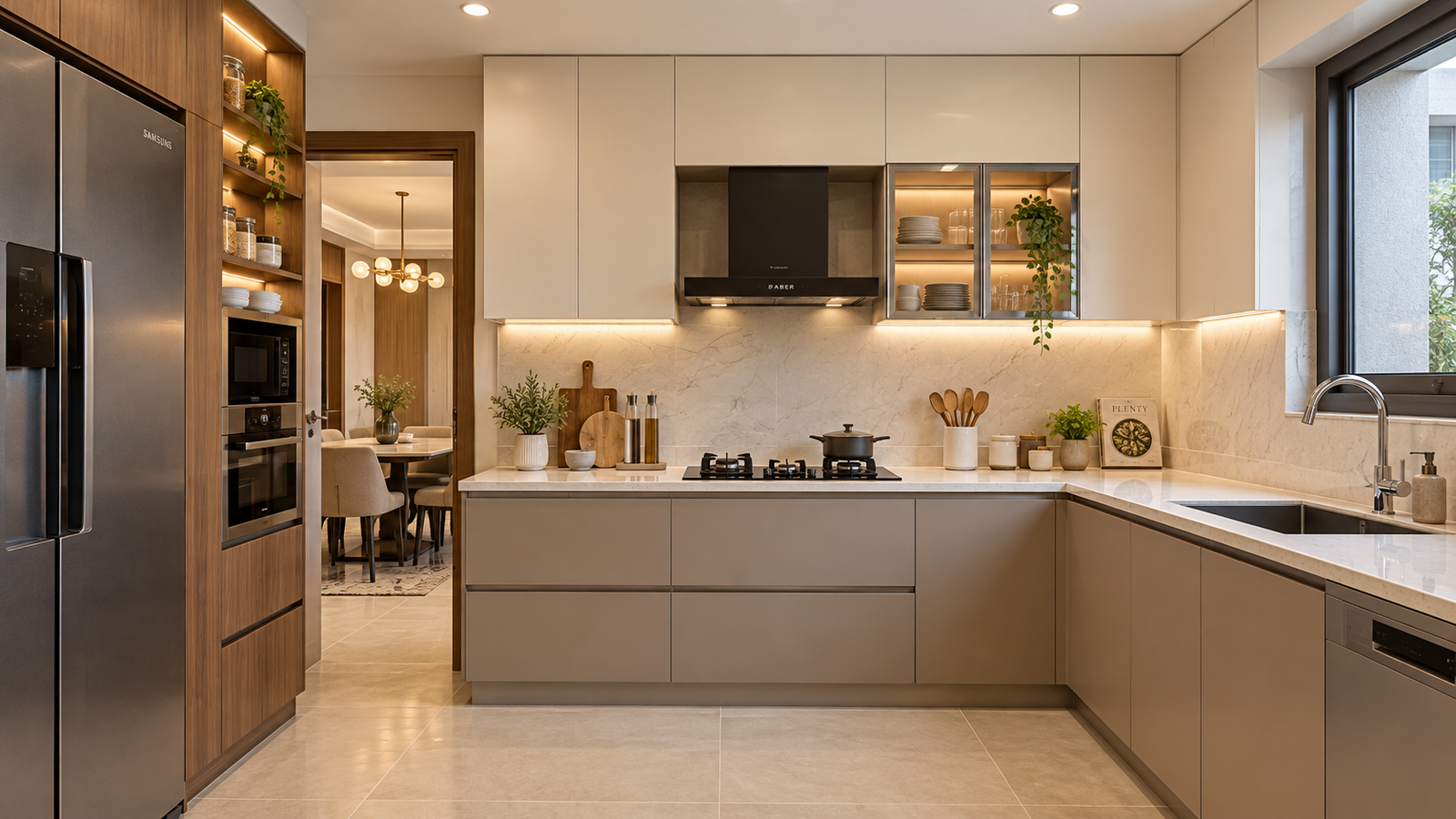
Acrylic, laminate and PU can all work on kitchen cabinet shutters. Acrylic is usually selected for a smooth, contemporary surface, laminate offers a broad choice of textures and patterns, and PU paint allows a specified colour and sheen on a prepared door. Compare them on an actual shutter sample, with its edge, backing and board included.
Compare the finished shutter, not just the surface
| Finish | Why it is selected | What to check |
|---|---|---|
| Acrylic | A smooth, even appearance, often in high gloss or matte | Surface grade, fingerprints in your lighting, edge matching and how a damaged door would be replaced |
| Laminate | A wide choice of solids, wood patterns and textures for everyday use | Laminate grade, grain direction, edge strip and appearance at corners and joints |
| PU paint | Custom colour and the option of painted profiles and edges | Substrate preparation, paint system, approved sheen and how touch-ups would be handled |
Look at the sample in the light you actually have
Hold samples upright next to the countertop and floor. Check them in daylight and under the task lighting you plan to use. A glossy shutter can make reflections, fingerprints and alignment more visible. With a textured laminate, check the grain direction across adjacent units. For PU, sign off a sample of the agreed colour and sheen on the actual substrate where possible.
Ask to see an edge close-up, a hinge drilling and the back of the sample. A kitchen door is a system of board, decorative face, backing, edge treatment and hardware. Sealed construction and ventilation matter near a sink or appliance. Follow the appliance clearances and the finish supplier’s product-specific guidance.
Talk through cleaning and repairs before ordering
Ask for written care instructions for the selected finish. Start with the recommended soft cloth and cleaning product. Avoid abrasives or strong solvents unless the manufacturer explicitly approves them. Check how the finish and its edges handle repeated wiping in high-use zones such as the sink base, bin cabinet and tall unit handles.
Ask what happens if a shutter is damaged several years later. Could the door be replaced or refinished, and would the colour or pattern still be available? With a custom paint, ask the team to record the colour code and sheen. With a sheet finish, retain the specification and lot information if available.
Get a comparison on the same kitchen drawing
Ask for material alternatives with identical cabinet sizes, board specification, hardware and scope. Compare the surface and edge price separately if possible. A mixed kitchen can use a practical finish on frequently handled lowers and a different treatment on the upper or tall units, provided the samples work together.
If you have two kitchen proposals, use TrueCompare™ to compare board, shutters, fittings and exclusions on the same scope.